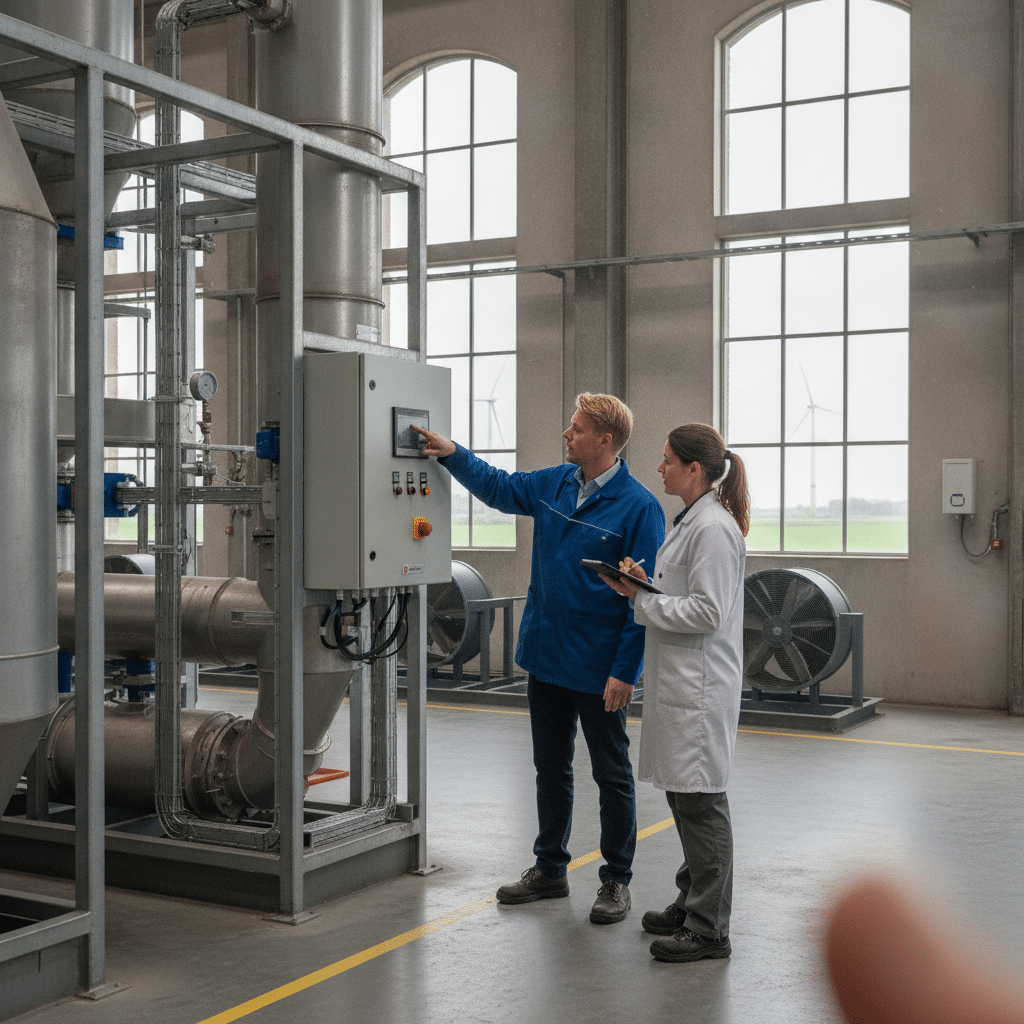
VOC Destruction and Removal Efficiency (DRE), Explained: How to Measure and Benchmark Abatement Performance
How to Evaluate and Benchmark VOC Destruction and Removal Efficiency
Industrial companies in the Netherlands and across Europe face ongoing demands to manage and reduce volatile organic compound (VOC) emissions. A deep understanding of destruction and removal efficiency (DRE) is essential for sustainable, compliant plant operation. Practical engineering partners like BM Process Management empower project owners and engineers to decipher DRE requirements, optimize emission abatement solutions, and navigate complex environmental regulations smoothly. By integrating robust measurement, compliance-focused benchmarking, and transparent reporting, facilities ensure long-term process safety and environmental value.
Defining VOC Destruction and Removal Efficiency: What You Need to Know
DRE illustrates the percentage of VOCs eliminated from process gas streams by emission control equipment. It’s a central indicator for pollution control, reflecting a system’s ability to convert harmful VOCs into less hazardous compounds, mostly water vapor and carbon dioxide. Industrial abatement solutions like regenerative thermal oxidizers (RTO), catalytic oxidizers, plasma units, or even a flare are routinely assessed for their DRE to demonstrate environmental reliability.
- The DRE formula compares untreated VOC levels in incoming gas with levels post-abatement.
- High DRE is crucial for VOCs abatement: regulatory permits often mandate efficiency above 95% for targeted sources, with stricter requirements for high-impact sectors.
- Adhering to DRE values assures environmental compliance while delivering measurable VOC treatment outcomes.
Commitment to high DRE goes beyond compliance—it builds trust, reduces environmental liability, and signals a proactive culture of operational responsibility.
Main Factors That Influence DRE
DRE is affected by operating conditions, technology, and process fluctuations. Consistent, efficient removal requires close coordination across all aspects of engineering and operations. The following elements are especially influential:
- Temperature regulation: RTO, catalytic, and plasma systems achieve the highest DRE when temperatures are controlled precisely.
- Residence time: A longer retention period within abatement reactors promotes more thorough combustion efficiency and VOC destruction.
- Mixing quality: Turbulence and gas uniformity heighten molecular contact with oxidative or plasma fields, ensuring even pollutant removal.
- Media status: When catalyst surfaces or thermal bed media degrade, DRE drops, highlighting the importance of preventive maintenance.
- Variability of VOC stream and desorption cycles: Shifts in concentration, type, or desorption from storage can momentarily decrease abatement performance.
- Routine maintenance: Leak detection, refractory examination, and heat exchanger upkeep keep the system at peak function.
For sectors where product changes and seasonal process adjustments are common, rigorous monitoring and flexible process management approaches are necessary.
Which Abatement Technologies Deliver Outstanding DRE?
Facilities must select the most appropriate emission control tactics to support both compliance and efficiency. Leading techniques for VOC treatment include:
- Regenerative thermal oxidizer (RTO): Harvests exhaust heat with ceramic beds, sustaining optimal temperatures for consistent, high DRE and energy reduction. RTO technology is a first choice in many Dutch sectors.
- Catalytic oxidation: Reacts at lower temperatures using catalyst surfaces, offering savings for compatible VOC types while still achieving stringent abatement targets.
- Plasma systems: Disrupt molecular bonds within gas streams, valuable for specialty VOCs where conventional oxidation is less effective.
- Thermal recuperative oxidizer: Transfers heat from exhaust to incoming polluted air, maintaining destruction rates and minimizing energy demand.
- Flare systems: Simple combustion allows rapid reduction in VOC load during upsets, but DRE can fluctuate based on turbulent or variable flows.
- Gas concentrators: Condense low-level VOCs before final abatement, raising overall system effectiveness—this step often supports compliance for dilute streams.
Each method brings distinct environmental and operational benefits. Smart selection is best achieved with guidance from hands-on, real-world specialists.
Measuring and Validating DRE: Practical Methods
True DRE measurement requires accuracy, accredited instrumentation, and well-defined procedures. Steps taken by leading emission management professionals include:
- Pre-abatement and post-abatement sampling, capturing VOC concentrations precisely at representative points.
- Employing advanced detectors such as gas chromatography or flame ionization analysis for quantitation.
- Adjusting readings for physical variables such as temperature, pressure, and humidity, plus methane emissions, if relevant.
- Sustaining calibration of monitors and attention to sensor drift to guarantee result reliability.
- Full documentation of test cycles, making records accessible for regulatory validation and audit trails.
Repeat assessment provides ongoing assurance that pollution control solutions are consistently maintaining the expected DRE, shielding facilities from unexpected compliance issues.
Regulatory Benchmarks and DRE Targets in the Netherlands
National and European frameworks shape sector- and process-specific DRE requirements, encouraging continuous improvement in VOCs abatement. Within Dutch industry, best practices incorporate:
- DRE mandates between 95-99.9%, with specific expectations linked to sector activity and permit classifications.
- Mandatory demonstration through certified performance measurements and regular abatement device validation.
- Scrutiny of high-risk activities, such as chemical processing, tank storage, or waste facility operations, which may encounter varied gas streams and desorption events.
- Ongoing benchmarking to align local practices with industry leaders and international emission trends.
Expert engineering consultants bridge the gap between current system performance, legal requirements, and future-oriented upgrades, ensuring operators maintain environmental leadership.
Operational Impacts: Why DRE Drives Environmental and Business Results
Reliable abatement, maximized DRE, and solid compliance help Dutch companies boost operational continuity, protect local communities, and optimize budgets. Some significant outcomes include:
- Minimized VOC and methane emissions translate into lower environmental footprints and reduced greenhouse gas metrics.
- Confidence in compliance with standards under the Industrial Emissions Directive and Dutch environmental oversight.
- Cost reductions, from avoidance of non-compliance penalties to savings on energy via recuperative or concentrator-based systems.
- Stronger safety records supported by prompt detection and management of pollutant releases throughout the facility’s life cycle.
- Enhanced process transparency and trust with regulators, stakeholders, and the communities served.
Firsthand, on-site engineering support, specialized training, and routine upgrades help clients sustain high-level performance from commissioning through ongoing improvement cycles.
Conclusion
Managing VOC destruction and removal efficiency is a foundation for operational reliability, safety, and positive environmental stewardship in today’s industrial landscape. By partnering with knowledgeable, hands-on experts at BM Process Management, facilities gain long-term technical assurance, clear guidance on regulatory expectations, and access to best-in-class VOCs abatement technologies. Focusing on practical engineering, precise measurement, and continuous process optimization is the best route to enduring compliance and tangible value. To explore how your company can achieve superior DRE and performance, request a tailored assessment at BM Process Management.