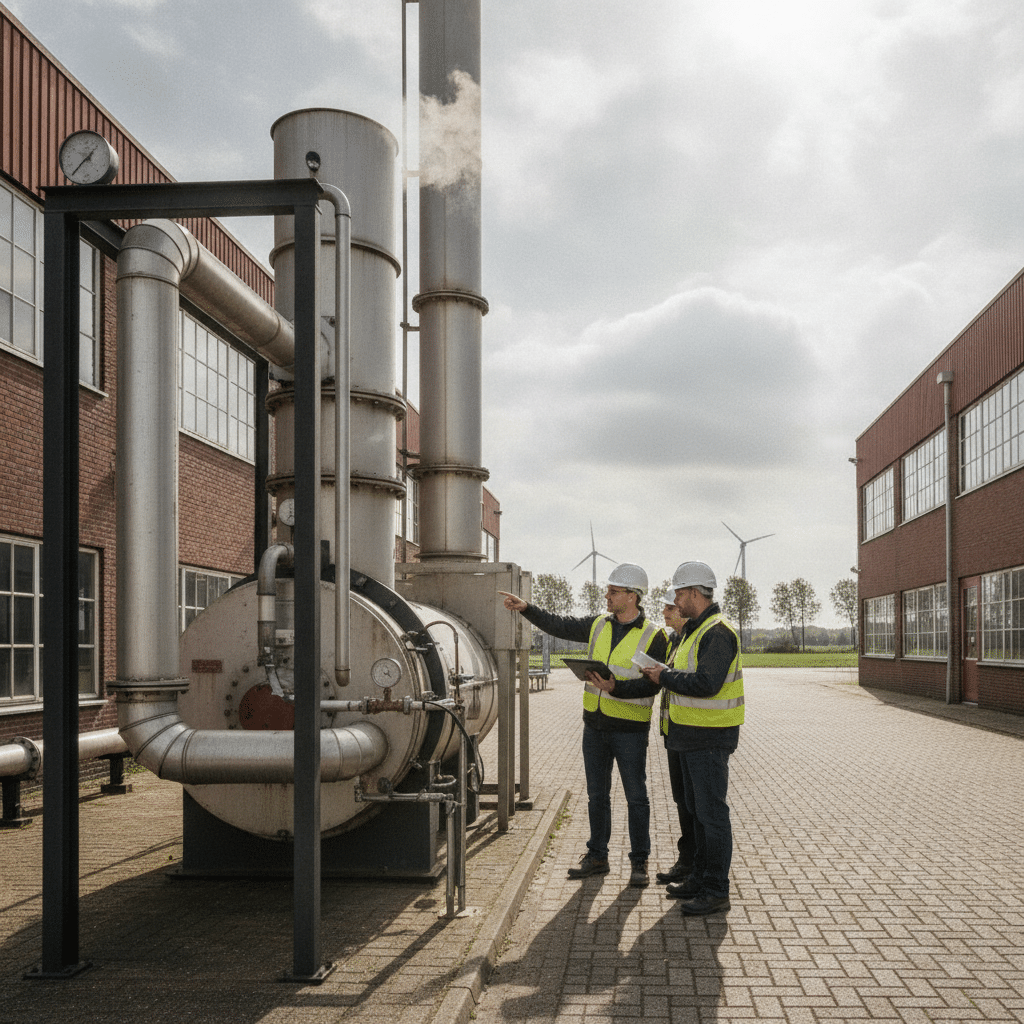
The Medium Combustion Plant Directive (MCPD), Explained: Thresholds, Emission Limits and Deadlines
Your Practical Guide to the Medium Combustion Plant Directive in the Netherlands
The Medium Combustion Plant Directive (MCPD) brings a standardised approach to controlling emissions from combustion equipment across the EU, setting clear expectations for Dutch industrial operators. For companies in sectors such as chemicals, energy, and manufacturing, understanding and meeting these requirements is essential. This page clarifies what the MCPD means for your facility, outlines the main obligations, and describes how our BM Process Management experts can guide you through every step, from initial review to ongoing compliance. Our team supports your environmental permit journey, providing personalized, hands-on consultancy for consistent results. For resources and quick reference, visit our insights page or go directly to compliance assistance at BM Process Management.
MCPD: What It Covers and Why It Matters
Designed to limit harmful pollution, the MCP directive applies to a wide range of plants using natural gas and other fuels. Its implementation was driven by both environmental and health priorities, aiming to curb emissions from facilities generating between 1 and 50 megawatts of thermal input. By enforcing uniform emission limits, the MCP directive not only safeguards air quality but also promotes a fair, transparent regulatory environment for operators.
- Any new or existing power plant, boiler, engine, or turbine with a thermal input between 1 and 50 MWth falls under the MCP directive regardless of industrial sector.
- The main focus areas are emission limits for sulphur dioxide (SO2), nitrogen oxides (NOx), and dust.
- Operators are required to register equipment with the Environment Agency and secure an environmental permit or an mcp permit before starting operation.
- The directive encourages efficient, consistent monitoring and streamlined environmental management for Dutch business sectors.
By following the MCPD, Dutch industrial operators build stronger trust with regulators and demonstrate leadership in sustainable operations.
Determining Applicability: Thresholds and Plant Classification
Knowing whether your installation falls within MCPD scope is the first step to legal compliance. The legislation offers clear boundaries, so it’s important to confirm where your facility fits.
- All units with 1–50 MWth rated thermal input, including those running frequently or seasonally, are covered.
- Installations below 1 MWth remain outside MCPD but may still fall under other local emissions directive rules or need permit application.
- Combustion units above 50 MWth fall under the Industrial Emissions Directive, not the MCPD ruleset.
- Certain plant types—such as mobile equipment, emergency generators, and some research units—may be exempted if they meet specific conditions.
Careful assessment of your facility’s design and use cases speeds up mcp permit application and helps avoid unnecessary compliance costs or operational delays.
Setting and Meeting Emission Limits
The MCPD establishes strict emission limits for SO2, NOx, and dust, tailored to the type of fuel and specific equipment. These emission limits are based on rigorous science but allow flexibility, so that technology upgrades or business realities are not hampered.
- Separate values for natural gas, biogas, oil-based and solid fuels are assigned to suit each application.
- Limits are precisely matched to the commissioning date and plant size, affecting both permit application and ongoing compliance requirements.
- Routine emissions testing and accurate reporting are mandatory, helping operators document adherence to threshold values for their mcpd permit.
- Reporting failures or breaches is compulsory—prompt remedial measures and clear communication with the Environment Agency are expected.
- Facilities with fluctuating loads or irregular operating hours are given guidance for monitoring, reducing unnecessary testing while maintaining compliance.
This rigorous but realistic approach enables both environmental protection and stable industrial activity in the Netherlands.
Important Deadlines and Registration Procedures
Timing is pivotal in MCPD implementation. Registration and compliance deadlines depend on plant type and commissioning status, so keeping an accurate timeline is key for every operator.
- For new installations (from 20 December 2026), MCPD emission limits must be satisfied before operation begins—no exceptions.
- For existing plants between 5–50 MWth, all emission limits apply from 1 January 2026.
- For installations in the 1–5 MWth band, the same 1 January 2026 deadline applies for full MCPD compliance.
- Every qualifying plant must secure the appropriate environmental permit, submit a detailed permit application to the Environment Agency, and keep thorough records on equipment and emissions testing.
- Accurate record keeping is not only a legal requirement but is checked during audits—lapses may lead to mcp permit suspension or operational penalties.
Following the official schedule can help you avoid lost production and maintain a good relationship with regulators and stakeholders.
Pathway to MCPD Success: Steps for Reliable Compliance
Conforming to the MCPD is manageable with a practical approach—process steps are clear if tackled methodically. Start by auditing your combustion equipment, follow with technical preparation, and secure the necessary documentation.
- Identify all relevant combustion sources and classify them according to input and use status.
- Clarify if specific exemptions or streamlined mcp permit processes can be used based on plant characteristics.
- Organize baseline emissions testing to reveal retrofitting or upgrade needs for the equipment.
- Prepare all details for a robust permit application, making sure operational and technical data match directive expectations.
- Install and verify emission control technologies, such as dust filters or NOx reduction systems, as required to meet standards.
- Plan for regular monitoring, aligning emissions testing and documentation cycles with your mcpd permit conditions and renewal timelines.
Every stage, from pre-assessment to renewal, can be managed with fewer interruptions and lower costs by starting early and using trusted consultancy like BM Process Management.
Advanced Support and Technology for MCPD Success
Modern emission reduction solutions streamline compliance without compromising performance. BM Process Management specializes in engineering and consultancy, offering Dutch operators practical guidance and technical expertise at every phase.
- Tailor your emission controls, using regenerative thermal oxidation, catalytic systems, or plug-and-play technology for process safety and flexibility.
- Lean on expert engineers for smooth implementation and technical audits to optimize your emissions strategy.
- Receive in-depth training on MCPD permit application, process safety review, and regulatory updates for ongoing competence and confidence.
- Benefit from consultation on system upgrades and sector-specific solutions, ensuring sustainable compliance across industries.
With a flexible approach, BM Process Management bridges the gap between regulatory requirements and operational needs, supporting your environmental and business goals alike.
Conclusion
The Medium Combustion Plant Directive establishes rigorous legal and technical expectations for Dutch industrial plants. Accurately identifying in-scope equipment, meeting specific emission limits, and following permit application guidance are fundamental for both compliance and long-term facility success. BM Process Management partners with you through each MCPD phase, combining specialist process safety knowledge and proven engineering to deliver real value—beyond basic paperwork. Secure your environmental permit confidently and maintain high standards with support from a dedicated, trusted advisor. Discover more about our comprehensive compliance services at BM Process Management.