Industrial Odour Control Methods: How to Identify, Measure and Treat Nuisance Emissions
Comprehensive Strategies for Tackling Industrial Odour in the Netherlands
Managing odour pollution remains a top concern for Dutch industrial operators, required not only for legal compliance but also for maintaining strong community relationships. At BM Process Management, our expertise bridges engineering depth with practical consultancy, offering clients reliable guidance on industrial odour control methods from initial identification to robust mitigation. This guide navigates the critical aspects of emission origin, measurement, treatment, and regulatory standards, ensuring your industrial facilities uphold the best practices in emission and pollution control.
Introduction to Industrial Odour Control
Industrial sectors such as food processing, petrochemicals, tank storage, wastewater treatment, and recycling create complex odours due to biological, chemical, and physical processes. Efficient odour suppression solutions not only protect air quality but also strengthen your company’s reputation and operational sustainability. Implementing strategic odour-neutraliser and pollution control technologies forms a core defence against community complaints and regulatory risks.
How Odour Is Formed in Industrial Processes
Odour emissions in industry originate from the handling and transformation of organic material, chemical reactions, and ineffective waste management. Key contributors to odour formation include:
- Biological breakdown, such as fermentation or composting, releasing volatile organic compounds (VOCs) and methane during starch and food production.
- Chemical reactions at sewage treatment plants or in water treatment, often producing hydrogen sulphide and ammonia, which are experienced as a bad smell.
- Handling byproducts containing sulphur, nitrogen, or complex chemicals common in tank storage or recycling, producing challenging odours.
Understanding the specific origin within each process forms the cornerstone of targeted odour eliminator system design and emission control measures tailored to the Netherlands’ industrial landscape.
Odour Management in Industry
Effective management begins with site audit and proactive steps that address sources before odour pollution spreads beyond facility boundaries. Companies like BM Process Management focus on integrated solutions that include:
- Sealing storage areas, maintaining control units, and regularly inspecting tanks in waste management operations to prevent leaks.
- Optimising aeration, mixing strategies, and chemical dosing in water treatment and sewage treatment plant systems, which reduces formation of odorous compounds.
- Ensuring proper segregation and pre-treatment of waste and wastewater, lessening load on downstream odour neutraliser technology.
Consistent maintenance and a hands-on approach help reduce operational downtime and maintain a compliant profile in the face of evolving regulations.
Measurement of Odour Emissions from Industries
Measuring odour emissions accurately is fundamental to successful pollution control and regulatory adherence. This is achieved using several techniques:
- Olfactometry: Human panels evaluate air samples to determine odour concentration, offering insights on nuisance levels experienced by communities.
- Chemical Analysis: Specialized sensors and analytical equipment quantify VOCs and other odorants emerging from processing lines, sewage treatment plants, and recycling facilities.
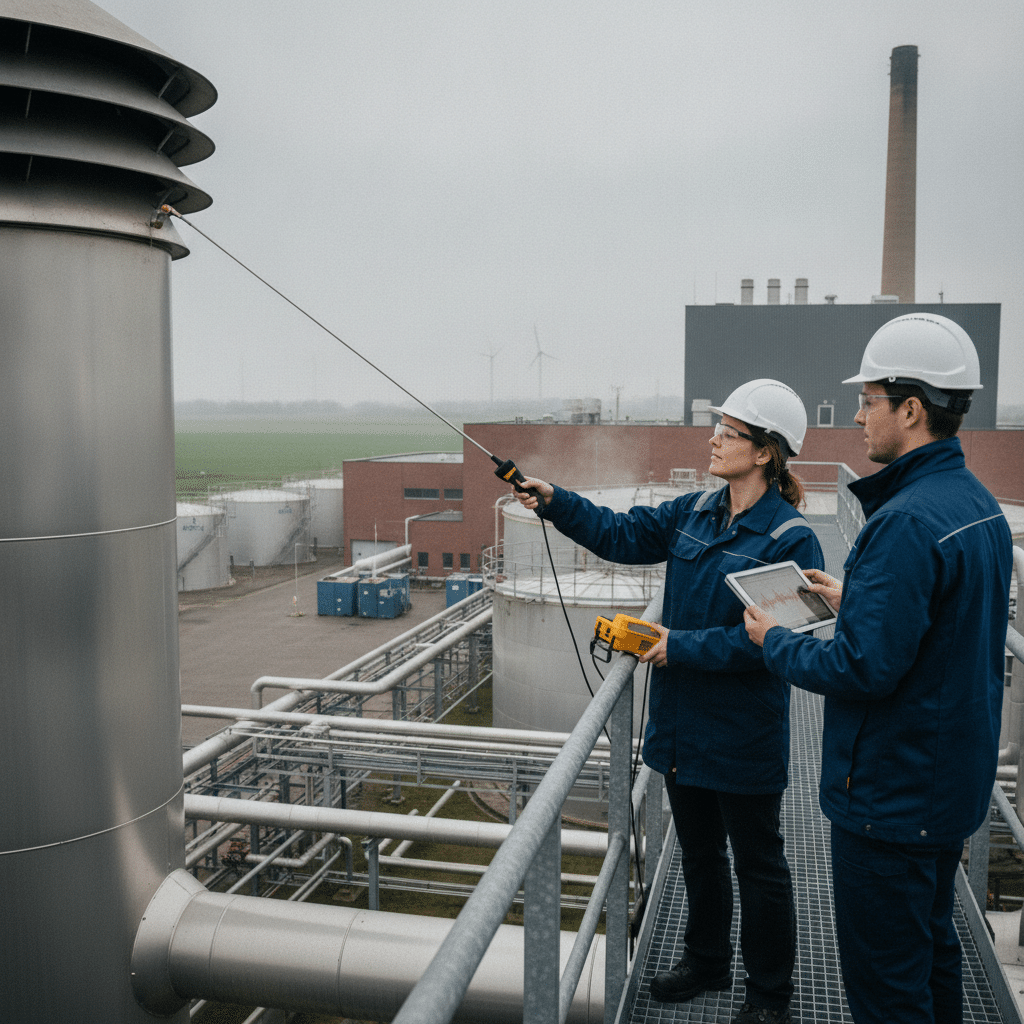
- Continuous Monitoring: Automated control units provide real-time data on emission fluctuations, supporting timely intervention.
These quantitative and qualitative methods together allow for targeted adjustments in odour suppression systems and timely reporting to Dutch environmental authorities.
The Human Sense of Smell and Its Role in Odour Perception
Understanding human olfactory response is crucial for industrial facilities. The perception threshold—where an odorous compound becomes noticeable—varies across individuals. Influential factors include:
- The chemical nature and concentration of released odorants, such as those found in ammonia or VOCs in wastewater treatment processes.
- Environmental conditions like humidity, temperature, and wind, which influence dispersion from emission points.
- The adaptability of the human olfactory system, which can become desensitised over time or acutely sensitive during short, high-exposure periods.
A practical approach to odour control must account for both scientific measurement and public perception to maintain positive community relations.
Odour Pollution and Its Causes
Odour pollution, often described as a persistent bad smell, arises from incomplete containment, ineffective odour neutraliser systems, or inadequate wastewater or waste management. Operational or design flaws may lead to problems such as:
- Uncontrolled emissions in raw waste handling areas or open tanks, impacting air quality for adjacent residential or commercial zones.
- Improper dosing of chemicals or failure of misting system nozzles in air emission points, allowing odour to escape undetected.
Identifying and resolving these root causes ensures cleaner industrial processes and reduces incident frequency.
Regulation of Odour Pollution in the Environment
Strict Dutch and EU regulations control odour emissions, imposing limits on nuisance and requiring robust compliance documentation. Facilities must:
- Conduct risk assessments and process safety studies, guided by engineering consultants experienced in local regulations.
- Demonstrate the implementation of best-available control technologies, such as activated carbon filtration or advanced misting systems, across emission sources.
- Maintain transparent records, ensuring every odour suppression and neutraliser measure aligns with current permits.
- Train operational personnel to respond rapidly to changes in process or environmental conditions.
With personalized support from experienced teams, businesses ensure audit-readiness and stable regulatory relations.
Conclusion
Addressing industrial odour pollution demands both technical expertise and hands-on collaboration. By pinpointing emission sources, leveraging precise measurement, and deploying robust odour eliminator systems like activated carbon filters, misting system technology, and biological filtration, Dutch industries remain compliant and community focused. BM Process Management stands ready to support your facility through tailored pollution control strategies, continuous training, and actionable consultancy to secure truly sustainable operations. Discover the benefits of a trusted partnership and enhance your odour control with our proven services and in-depth process insight.